HKU SPACE
April 2014 News Express | 中文版
Feature:
Archiving our past for building our future

photoFreedom of information and access to information are the cornerstones of a civilised society. The collective memory of the public of a certain event is essential for the understanding of heritage, preservation of culture and advancement of knowledge. A recent report by the Office of the Ombudsman in Hong Kong in March this year highlights the importance of archive management in preserving the collective memory and cohesion of our society.

Archives management: a critical new role

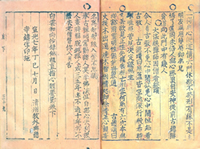
Dated long back in the history, human beings used stone tablets or parchment as means to record. The remains of these records allow us to learn about the history of hundreds or even thousands of years ago. As technology advances, we are now able to store information digitally. In this digital era, we can store a lot more information than in the past; however, digital documents are vulnerable to loss, especially when there is damage to or update on the storing electronic devices. Archives management has therefore taken up a new critical role in protecting digital information.

Three fundamental categories of heritage

In its ‘Memory of the World’ programme, The United Nations Educational, Scientific and Cultural Organization (UNESCO) highlights three fundamental types of heritage which need to be preserved.

First, it is to protect the world' natural and cultural heritages. This can be achieved by protecting historical sites such as Acropolis in Athens or Angkor Wat in Cambodia, preserving artefacts in proper museums which are run by professionals with related training. It is also important to reduce the impacts of disasters to the world natural and cultural heritages. Existing projects include assisting the rehabilitation of the Sichuan Giant Panda Sanctuaries after the earthquake in 2008.

Second, it is to preserve the intangible cultural heritage which includes oral traditions, rituals, social practices, etc. By protecting the cultural heritage, the diversity of human culture across different communities can be maintained despite the trend of globalisation. The preservation of cultural heritage also encourages the transmission of knowledge from one generation to the next, and thus gives us the sense of identity which can lead to social cohesion. The study of the diversified culture also allows the mutual understanding of different people’s ways of life.

Third, it is to archive the documentary heritage. This involves the preservation of documentary heritage which has world significance and to make such heritage accessible to most number of people. Unfortunately, the development of technology may not necessarily help in preserving the heritage at some times. For example, the videotapes used in storing the audio-visual documents can usually survive only for decades. Therefore, we need the appropriate archives management technology and skills to ensure the stability and retrievability of the documentary heritage, especially when facing the rapidly expanding amount of computer-based materials.

A demand for skills

The rapid transfer of information nowadays increases the demand of professionals with expertise in archives. Not only is the demand of the skills of archives growing in both the public and private corporations, but it has also become more important at the national and global level.

Relevant programmes

To address the growing demand for archive management skills, the School introduces a series of courses which help students understand the importance of keeping archives; to plan, establish and manage archives so as to meet the business, legal, fiscal, public relations and cultural needs.

Documents and Records Management for SME
Establishing Small Archives for Schools and Institutions
Introduction to Archives Management
Postgraduate Diploma in Cultural Heritage Management
Professional Certificate in Heritage Building Management
Executive Certificate in Archives Management (To be offered in Sept 2014)
Copyright © 2014 HKU SPACE. All rights reserved.
Privacy Policy|Web Publishing Policy
Caring Organisation IMA with Best in Class