FAQs
FAQs  Login Success
Languages European
Why French/ Spanish/ German/ Italian/ Portuguese/ Latin/ Arabic/ Polish/ Swedish/ Russian@HKUSPACE
European
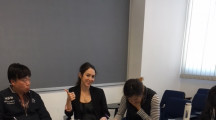
Welcome to our European Language website.
Our main languages are Spanish, French, German, Italian and Portuguese, but we do also offer courses in other languages such as Arabic, Greek, Latin, Polish, Russian, Swedish, Finnish and Dutch.
Our award-bearing courses, which last 120 hours each, are mostly CEF-certified, with well-developed curricula and assessment systems which cover various aspects of the European languages including reading, writing, listening, speaking, grammar and vocabulary.
Besides, we have shorter courses of just 30 hours, more casual and non-exam based, such as courses for travellers or for beginners, courses in the mornings or during the weekends.
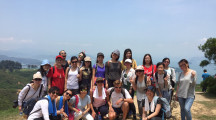
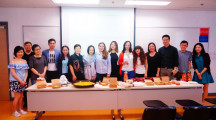
Finally, you can´t miss out on our fun workshops, such as Italian Fashion, Food and Drink, Cooking courses and our several cultural gatherings during the year for each of our main languages!
Our teachers are passionate and committed to the language learning and will guide you through your journey at HKU SPACE!






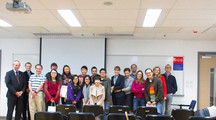
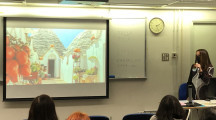
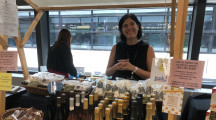



European Programmes
- Sort by
- Programme Title

The programme is equivalent to A1 level in the Common European Framework of Reference (CEFR).
*學員需分兩期繳付學費及材料費。
第一期學費: $46,300
須於單元一開始前繳付;另須於單元一首節課堂繳付約$8,700材料費。
第二期學費: $23,500
須於單元四開始前繳付;另須於單元四首節課堂繳付約$5,200材料費。
上述材料費不包括作業/評核所需的美術材料,以及實地考察活動的入場費及活動費用。
Why should we take the TCF?
- Compendious Assessment: The TCF evaluates your French languages skills in a comprehensive way with different language aspects included.
- International accreditation: The TCF is administered by the Centre International d'Etudes Pédagogiques (CIEP) for the French Ministry of Education. It is designed and accredited according to international standards.
- Pathway to Overseas Studies: The TCF is widely recognized by higher educational institutions, universities and government authorities.
- Professional Development: The results of the benchmark exam, which are also recognized in the professional sector, could be used to endorse your job applications or career development.
- CEF Reimbursement: Under the scheme of CEF, both the fee of the certificate courses offered by HKU SPACE and the TCF exam fee are reimbursable.
The programme is equivalent to B1+ level in the Common European Framework of Reference (CEFR)

- Introduce students to simple phrases and sentences used in basic conversation.
- Teach students the basic grammar and vocabulary needed for simple communication.
- Provide students with the techniques needed to listen with confidence to simplified, everyday dialogues when spoken clearly and slowly.
- Introduce students to some aspects of Spanish-speaking cultures such as places for travel and traditional clothing.
- Enable students to extract information from simple written texts such as forms, and short, simplified articles, and to write short, simple emails and fill in information on a form.
The programme aims to:
- Introduce students to simple phrases and sentences used in basic conversation.
- Teach students the basic grammar and vocabulary needed for simple communication.
- Provide students with the techniques needed to listen with confidence to simplified, everyday dialogues when spoken clearly and slowly.
- Introduce students to some aspects of German-speaking cultures such as places for travel and traditional clothing.
- Enable students to extract information from simple written texts such as forms, and short, simplified articles, and to write short, simple emails and fill in information on a form.
- Introduce students to very simple phrases and sentences used in basic conversation.
- Teach students the very basic grammar and vocabulary needed for very simple communication.
- Provide students with the techniques needed to listen with confidence to simplified, everyday dialogues when spoken very clearly and slowly.
- Introduce students to some aspects of Spanish-speaking cultures such as food and drink, greetings, festivals and places.
- Enable students to extract information from very simple written texts such as forms and menus, and to write very short, simple emails and fill in information on a form.
The programmeaims to:
- Introduce students to very simple phrases and sentences used in basic conversation.
- Teach students the very basic grammar and vocabulary needed for very simple communication.
- Provide students with the techniques needed to listen with confidence to simplified, everyday dialogues when spoken very clearly and slowly.
- Introduce students to some aspects of German-speaking cultures such as food and drink, greetings, festivals and places.
- Enable students to extract information from very simple written texts such as forms and menus, and to write very short, simple emails and fill in information on a form.
By the end of the programme, students should be able to talk about various topics in a more detailed and fluent way , write different types of texts regarding more abstract and cultural matters, summarise the main ideas when listening to clear speeches or reading a wide range of texts.
This course covers the content of the B2 level in the Common European Framework of Reference (CEFR).
This course covers the content of the A2 level in the Common European Framework of Reference (CEFR).